Yamuna River Pollution 2026: Toxic Foam, High BOD Levels Raise Health Concerns

Yamuna river pollution rises with high BOD, toxic foam, and sewage discharge. Know causes, health risks, and government actions.
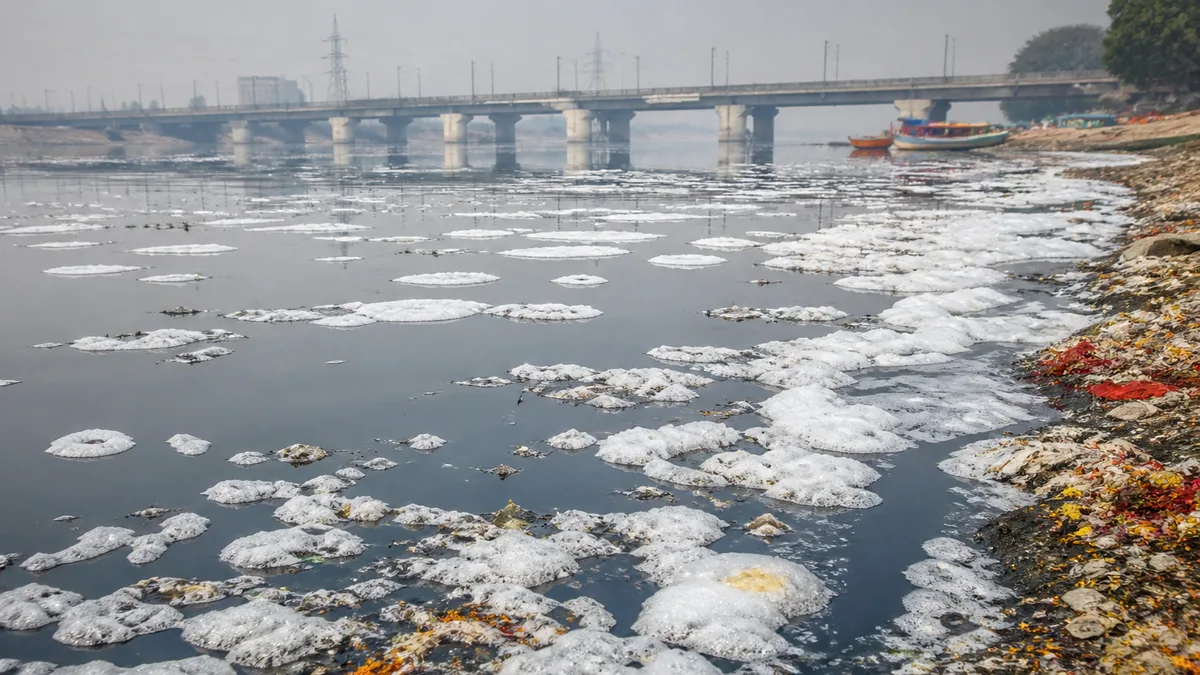
Yamuna River, especially in the Delhi stretch, is witnessing a significant increase in pollution levels, with visible toxic foam, dark water flow, and strong odor reported in multiple locations. Experts and environmental monitoring agencies indicate that pollution has reached critical levels in several zones.
Current Pollution Level (Ground Situation)
Recent environmental observations highlight:
- Biochemical Oxygen Demand (BOD): Reported in the range of 30–70 mg/L in polluted stretches (safe level < 3 mg/L)
- Dissolved Oxygen (DO): Near zero in some areas, indicating water is unfit for aquatic life
- Presence of thick white toxic foam in areas like Kalindi Kunj
- Water appearing blackish and stagnant in several points
These indicators show that the river water is currently not suitable for domestic or ecological use in many stretches.
Primary Causes of Pollution
1. Untreated Sewage Discharge
A large volume of untreated or partially treated sewage enters the river daily from urban drains.
- Estimated 70–80% pollution load comes from sewage
- Multiple drains directly release waste into the river
2. Industrial Waste
Industries in surrounding regions discharge chemical waste, heavy metals, and toxic substances into the water.
- Includes dyeing units, small factories, and processing plants
- Some units operate without adequate treatment systems
3. Solid Waste Dumping
Unregulated dumping of:
- Plastic waste
- Religious offerings
- Household garbage
Leads to surface blockage and contamination
4. Low Water Flow
Reduced freshwater flow from upstream results in:
- Poor dilution of pollutants
- Increased concentration of toxic substances
Health and Environmental Impact
Health Risks
Exposure to polluted river water can lead to:
- Skin infections and rashes
- Gastrointestinal diseases
- Risk of cholera and typhoid
- Long-term exposure may affect liver and kidney function
Environmental Impact
- Fish and aquatic life decline due to low oxygen
- Ecosystem imbalance
- Contamination of nearby groundwater sources
Government Measures and Ongoing Actions
Authorities have initiated multiple steps to control pollution:
- Expansion of Sewage Treatment Plants (STPs)
- Monitoring under national river conservation programs
- Restrictions on industrial discharge without treatment
- Awareness drives against waste dumping
Officials state that long-term infrastructure improvement is required for sustainable results.
Public Advisory
Residents are advised:
- Avoid direct contact with polluted river water
- Do not use untreated river water for drinking or washing
- Follow local administration guidelines in affected areas
Conclusion
The condition of the Yamuna highlights the urgent need for consistent monitoring, infrastructure upgrades, and public cooperation. While efforts are ongoing, experts emphasize that multi-level action is essential to restore the river’s health.